
iliotibial band stretches pdf
Understanding Iliotibial (IT) Band Syndrome
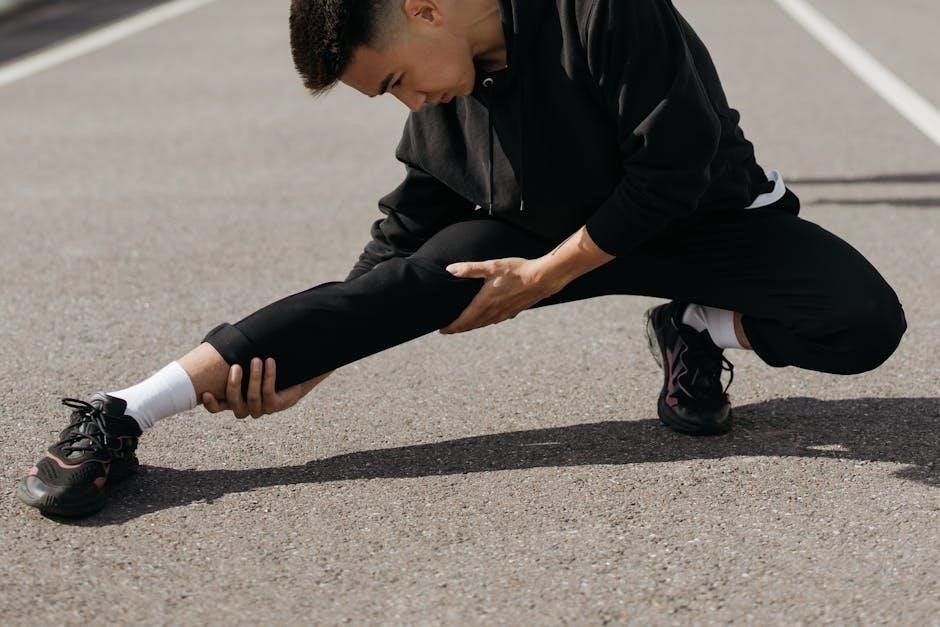
Iliotibial band syndrome (ITBS) frequently causes knee pain, especially in runners, impacting a significant portion of athletes and active individuals alike.
Experiencing knee pain is common, with IT band syndrome being a frequent culprit, often manifesting as soreness on the knee’s outer side.
Runners often encounter knee pain during their training, and ITBS is a prevalent issue, affecting many throughout their athletic journey.
Effective management of ITBS remains a challenge, necessitating a review of both conservative and advanced treatment approaches for optimal recovery.
This syndrome commonly affects active individuals, causing discomfort on the outer knee, and requires attention to prevent chronic issues.
Often referred to simply as IT band syndrome, this condition primarily causes pain on the outside of the knee, especially in athletes.
What is the Iliotibial Band?
The iliotibial (IT) band is a thick band of fibrous tissue that runs along the outside of the thigh, extending from the hip to just below the knee. It’s not a muscle itself, but rather a strong reinforcement of the thigh’s muscle group. This crucial band plays a vital role in stabilizing the knee during running and other physical activities.
Essentially, it connects the gluteal muscles to the tibia (shinbone), providing essential support and leverage. While generally resilient, the IT band can become inflamed or irritated, leading to Iliotibial Band Syndrome (ITBS). Understanding its structure and function is key to comprehending why ITBS develops and how to effectively address it.
The IT band’s primary function isn’t necessarily to move the knee, but to control lateral movement and prevent excessive stress. It works in conjunction with surrounding muscles to maintain proper knee alignment and stability, particularly during repetitive motions like running or cycling. Its robust nature is essential for athletic performance, but also makes it susceptible to overuse injuries.
The Role of the IT Band in Movement
The IT band’s primary role extends beyond simple knee movement; it’s a critical stabilizer during dynamic activities like running and cycling. It assists in hip abduction and extension, contributing to efficient locomotion. During these movements, the IT band glides over the lateral femoral epicondyle – the bony prominence on the outer knee – and friction can arise.
This gliding action is crucial, but repetitive motion can cause irritation, especially if there are biomechanical imbalances. The band doesn’t actively contract like a muscle, but its tension influences knee stability and power transfer. It works synergistically with the gluteus maximus and tensor fasciae latae muscles to control leg positioning.
Essentially, the IT band prevents the knee from collapsing inward during weight-bearing activities. Maintaining proper form and strength in the surrounding muscles is vital to ensure smooth IT band function and prevent the development of IT band syndrome, a common ailment among athletes.

Causes of IT Band Syndrome
IT band syndrome arises from overuse, repetitive motions, and anatomical factors, frequently impacting runners and athletes during prolonged physical activity and training regimens.
Overuse and Repetitive Motion

Overuse and repetitive motions are primary contributors to IT band syndrome, particularly in activities like running, cycling, and long-distance training. The iliotibial band, while strong, can become irritated and inflamed when subjected to consistent, high-impact stress. This occurs because the band rubs against the lateral femoral epicondyle – the bony prominence on the outside of the knee – with each bend and extension.
Increased training intensity or volume without adequate rest and recovery significantly elevates the risk. Runners, for instance, may experience ITBS after increasing mileage too quickly or running on uneven surfaces. Similarly, cyclists can develop the condition due to the repetitive leg motion and potential for improper bike fit. The constant friction generates heat and micro-trauma, leading to inflammation and pain. Ignoring early warning signs and continuing to push through discomfort exacerbates the problem, transforming initial irritation into a chronic condition.
Anatomical Factors Contributing to ITBS
Certain anatomical variations can predispose individuals to iliotibial band syndrome (ITBS). These aren’t necessarily causes of the syndrome, but they can increase susceptibility when combined with overuse. Variations in leg length discrepancies, even subtle ones, can alter biomechanics and place increased stress on the IT band. Similarly, the natural angle of the hip – known as Q-angle – can play a role; a larger Q-angle often correlates with increased IT band tension.
The shape of the femoral condyles (the rounded ends of the thigh bone) can also contribute. A more prominent lateral epicondyle, the bony bump on the outside of the knee, creates a smaller space for the IT band to glide, increasing friction. Furthermore, differences in muscle attachments and tissue flexibility can influence how the IT band functions. These anatomical factors, while not directly preventable, are important considerations when assessing and treating ITBS, often requiring a personalized approach to rehabilitation.
Biomechanical Issues (Foot Pronation, Leg Length Discrepancy)
Suboptimal biomechanics significantly contribute to the development of iliotibial band syndrome (ITBS). Excessive foot pronation – the inward rolling of the foot – alters lower limb alignment, internally rotating the tibia and increasing stress on the IT band. This altered mechanics can lead to increased friction as the IT band rubs against the lateral femoral epicondyle during knee flexion and extension.
Leg length discrepancies, even minor ones, force the body to compensate, creating imbalances in muscle activation and joint loading. The longer leg often experiences increased stress, while the shorter leg may lead to altered gait patterns. These biomechanical faults, coupled with repetitive movements like running, exacerbate IT band tension. Addressing these issues through orthotics, gait retraining, and targeted strengthening exercises is crucial for effective ITBS management and prevention.
Symptoms of IT Band Syndrome
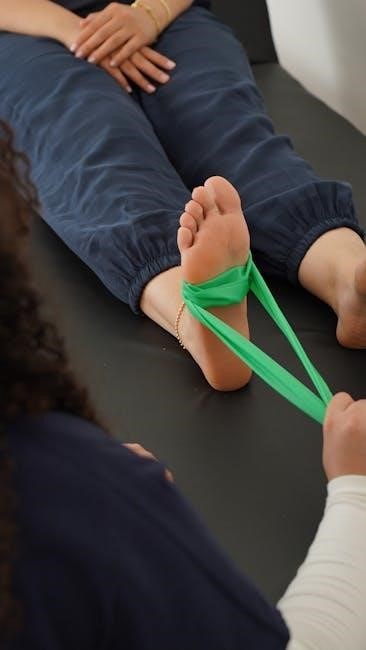
IT band syndrome typically presents as pain on the outer knee, often sharp, burning, or aching, triggered by activities like running and stair climbing.
Pain Location (Outer Knee)
The hallmark of IT band syndrome is pain localized to the outer aspect of the knee. This discomfort doesn’t typically originate inside the knee joint itself, but rather arises from friction between the iliotibial band and the lateral femoral epicondyle – the bony prominence on the outside of the knee. Initially, pain may only be present during or immediately after activity, such as running or cycling.
As the condition progresses, the pain can become more consistent and may even be noticeable at rest. Some individuals experience pain radiating up the thigh along the IT band. The precise location of the pain can vary slightly, but it’s almost always concentrated on the outer knee. It’s crucial to differentiate this pain from other knee conditions that present with pain on the inner side or within the joint.
Pain Characteristics (Sharp, Burning, Aching)
The nature of pain associated with IT band syndrome can vary significantly between individuals and even change over the course of the condition. Initially, the pain is often described as a mild aching sensation that develops gradually during activity. As the IT band continues to rub against the lateral femoral epicondyle, the pain can intensify, becoming sharp and stabbing, particularly during weight-bearing activities.
Some individuals report a burning sensation along the outer knee, especially during prolonged exercise. The pain may subside with rest but quickly returns upon resuming activity. In chronic cases, a dull, persistent ache may be present even at rest. The pain’s character often dictates the stage of ITBS and guides treatment approaches, ranging from simple rest to more intensive rehabilitation.
Pain Triggers (Running, Cycling, Stairs)
Specific activities consistently provoke pain in individuals suffering from Iliotibial (IT) band syndrome. Running is a primary trigger, with pain typically worsening during the midstance phase when the IT band rubs over the lateral femoral epicondyle. The repetitive flexion and extension of the knee during running exacerbate the friction and inflammation.
Cycling, particularly uphill or with high cadence, can also induce IT band pain due to the similar knee motion; Descending stairs frequently causes discomfort, as the IT band is stretched and compressed with each step. Even prolonged sitting with bent knees can sometimes contribute to symptoms. Identifying these triggers is crucial for activity modification and effective management of the condition, allowing for a tailored rehabilitation plan.
IT Band Stretches: A Comprehensive Guide
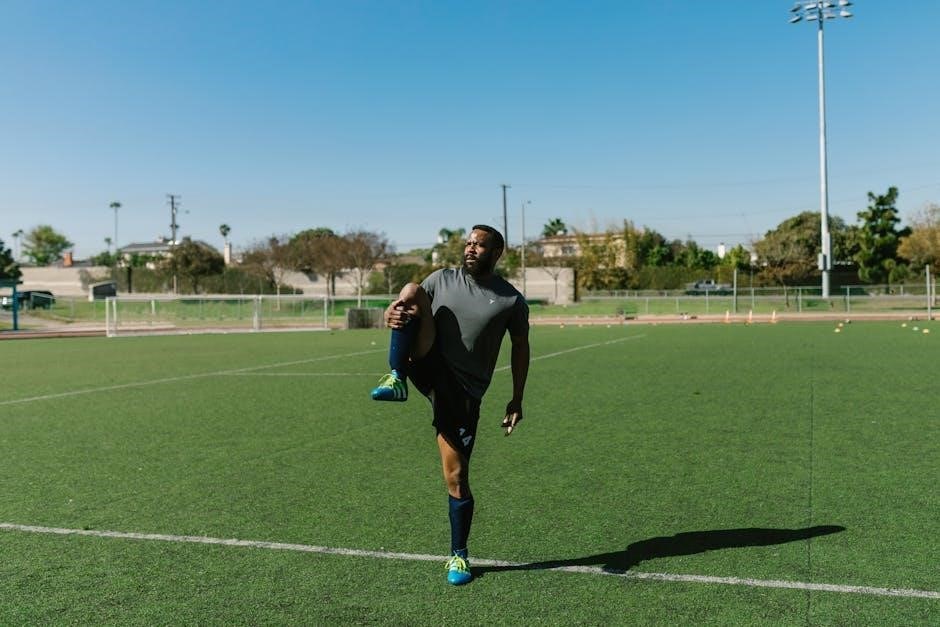
Effective stretching is vital for managing IT band syndrome, improving flexibility, and reducing discomfort; incorporating both static and dynamic exercises is highly recommended for optimal results.
Static IT Band Stretches
Static stretches involve holding a stretch in a challenging but comfortable position for a period, typically 30 seconds, to improve flexibility. These are best performed after a warm-up or workout when muscles are more pliable. Focusing on the IT band directly can be tricky, as it’s a thick band of tissue, so stretches often target surrounding muscles.
Standing IT Band Stretch: Stand with the affected leg crossed behind the other, then lean towards the unaffected side until you feel a stretch along the outside of your hip and thigh. Keep your back straight and core engaged.
Lying IT Band Stretch: Lie on your back with the affected leg straight and extended. Gently pull the leg across your body, holding it near the knee. You should feel a stretch along the outer thigh. Avoid overstretching and maintain a controlled movement. Consistency is key for noticeable improvements.
Standing IT Band Stretch
Performing the Standing IT Band Stretch effectively requires proper form to maximize benefit and minimize risk of injury. Begin by standing upright with your feet hip-width apart. Cross the leg affected by IT band syndrome behind your other leg.
Now, gently lean towards the side of your unaffected leg, reaching with your torso. You should feel a stretch along the outside of your hip and thigh – this is where the IT band is located. Maintain a straight back and engage your core muscles throughout the stretch to support your spine.
Hold this position for approximately 30 seconds, breathing deeply and consistently. Avoid bouncing or jerking movements. Repeat 2-3 times on each side. This stretch targets the IT band and surrounding tissues, promoting flexibility and reducing tension.
Lying IT Band Stretch
The Lying IT Band Stretch offers a gentle yet effective way to target the iliotibial band and alleviate tension. Begin by lying on your side with your legs extended, ensuring your body forms a straight line. Bend the top leg and cross it over the bottom leg, positioning your foot near the opposite knee.
Reach across your body with the arm on the same side as the bottom leg, and gently pull your bent knee towards your chest. You should feel a stretch along the outer thigh of the bottom leg – this indicates the IT band is being targeted. Keep your shoulders relaxed and flat on the ground.
Hold this stretch for 30 seconds, breathing deeply. Repeat 2-3 times on each side. This stretch is particularly useful for those finding the standing version challenging.
Dynamic IT Band Stretches
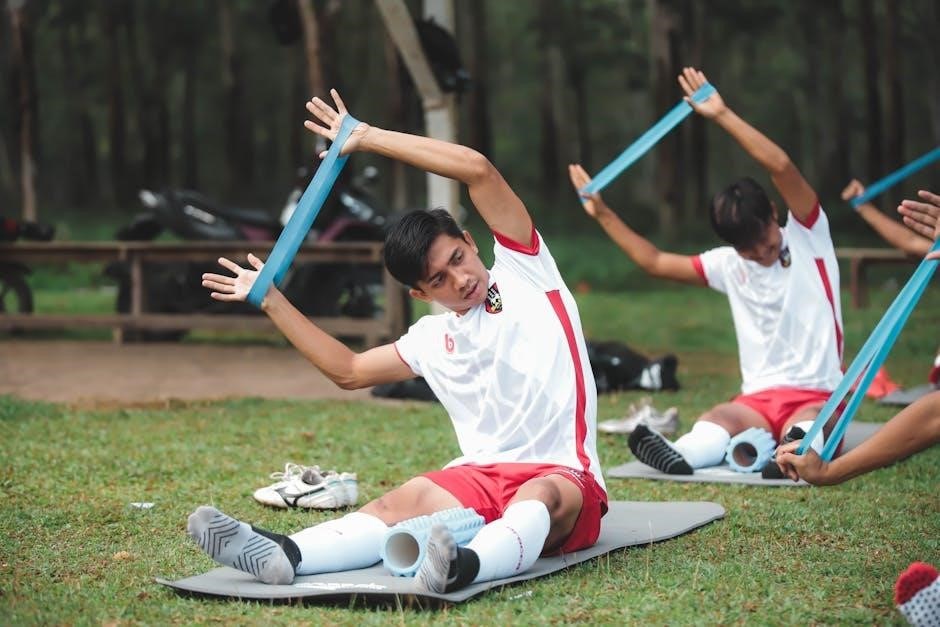
Dynamic stretches prepare the IT band for activity, increasing flexibility and range of motion. Unlike static stretches, these involve controlled movements. Leg Swings (Lateral) are excellent; stand tall and swing one leg out to the side, keeping it relatively straight. Focus on controlled movement, not extreme range. Repeat 10-15 times per leg.
Walking Lunges with a Twist also effectively engage the IT band. Perform a standard walking lunge, and as you lunge, twist your torso towards the front leg. This adds a rotational component, further stretching the IT band and surrounding muscles. Ensure your knee tracks over your ankle.
Perform 10-12 lunges per leg. These dynamic movements enhance blood flow and prepare the IT band for the demands of exercise, reducing injury risk.
Leg Swings (Lateral)
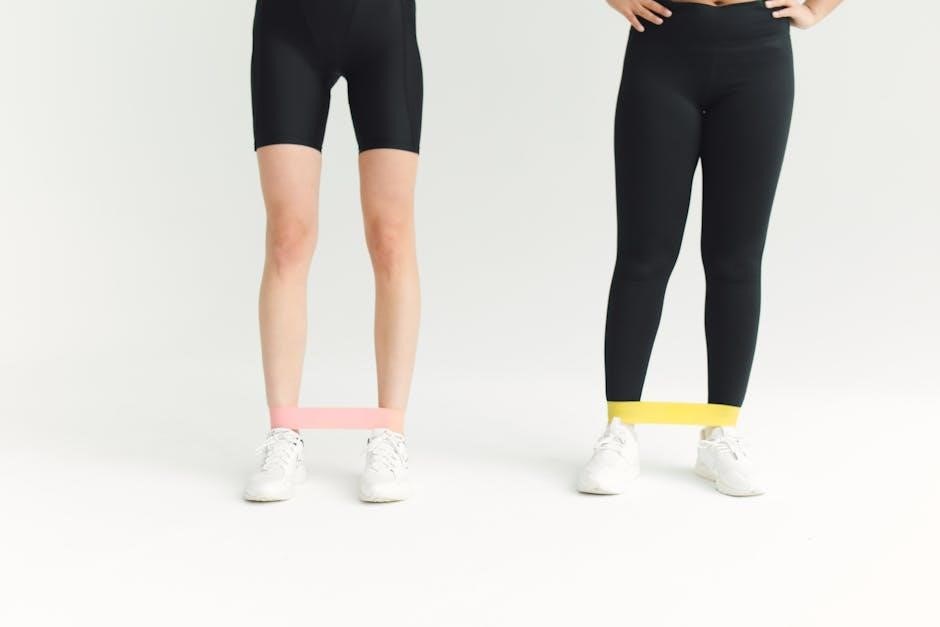
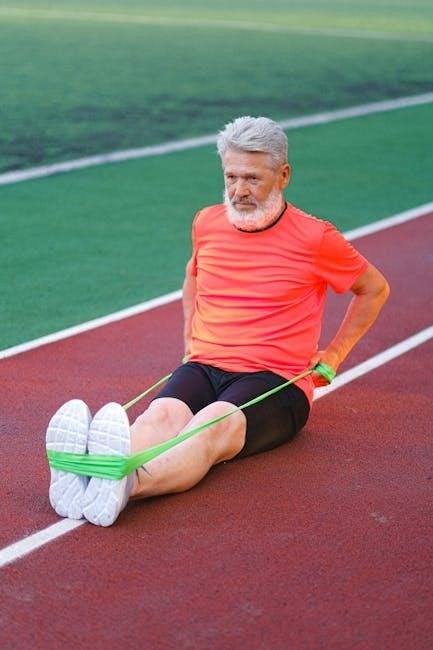
Lateral leg swings are a fantastic dynamic stretch for the IT band, enhancing flexibility and preparing the muscles for activity. Begin by standing tall with feet hip-width apart, holding onto a stable surface for balance if needed. Gently swing one leg out to the side, keeping your core engaged and back straight.
Focus on a controlled motion, avoiding jerky movements or overextension. The swing should originate from the hip joint, not the lower back. Aim for a comfortable range of motion, gradually increasing it with each swing. Perform 10-15 swings per leg, maintaining a consistent rhythm.
This stretch targets the IT band and surrounding hip abductors, improving mobility and reducing tightness. Remember to keep your body upright and avoid leaning forward or backward during the exercise.
Walking Lunges with Twist
Walking lunges with a twist are a dynamic stretch that effectively targets the IT band, hip flexors, and core muscles. Start in a standing position, then step forward into a lunge, ensuring your front knee stays aligned over your ankle. As you lunge, gently twist your torso towards the front leg, keeping your back straight and core engaged.
Hold the twisted position briefly, feeling a stretch along the outer thigh and hip. Then, push off with your front foot to return to a standing position and repeat on the other side. Perform 10-12 repetitions per leg, focusing on controlled movements and a full range of motion.
This exercise not only stretches the IT band but also improves rotational mobility and strengthens stabilizing muscles. Maintain proper form to prevent injury and maximize the benefits of the stretch.
Foam Rolling for IT Band Release
Foam rolling is a self-myofascial release technique that can help alleviate tension and improve flexibility in the IT band and surrounding muscles. Begin by positioning yourself with the foam roller under your outer thigh, supporting your weight with your hands and forearm.
Slowly roll from just above the knee to the hip, pausing on any tender spots for 20-30 seconds. This allows the muscle fibers to release and lengthen. Remember to breathe deeply throughout the process. Focus on maintaining controlled movements and avoiding sharp pain.
Additionally, foam roll your quadriceps and hamstrings, as tightness in these areas can contribute to IT band syndrome. Consistent foam rolling can improve tissue quality and reduce discomfort, aiding in recovery and prevention.
Proper Foam Rolling Technique
Effective foam rolling requires correct technique to maximize benefits and avoid injury. Start by positioning the roller under the outer thigh, supporting your body weight with your hands and opposite leg. Slowly roll from just above the knee towards the hip, maintaining a controlled pace.
Focus on areas of tenderness, pausing for 20-30 seconds to allow the muscle to release. Breathe deeply throughout the process, promoting relaxation. Avoid rolling directly over the knee joint itself. Keep your core engaged to stabilize your body.
Pressure should be firm but tolerable; adjust by altering the amount of weight you apply. Consistency is key – regular foam rolling, even for short durations, yields better results than infrequent, intense sessions; Listen to your body and stop if you experience sharp pain.
Areas to Focus on (IT Band, Quadriceps, Hamstrings)
Targeting key muscle groups with foam rolling is crucial for addressing IT band syndrome. Begin with the IT band itself, rolling from hip to knee, focusing on tender spots. Don’t neglect the quadriceps, rolling the front of the thigh to release tension that can contribute to IT band tightness.
The hamstrings, located on the back of the thigh, also play a role; rolling them helps improve overall leg flexibility and reduces strain on the IT band. Pay attention to the area around the knee, but avoid direct pressure on the joint.
Consider rolling the glutes (buttocks) as well, as hip stability impacts IT band function. A comprehensive approach, addressing all these areas, provides the most effective relief and supports long-term recovery.
Additional Treatments for IT Band Syndrome
Rest and activity modification are vital, alongside ice and anti-inflammatory medications, to reduce pain and inflammation effectively.
Physical therapy and rehabilitation programs offer targeted exercises to restore function and prevent recurrence of the syndrome.
Rest and Activity Modification
Initial management of IT band syndrome often centers around reducing activities that aggravate the pain. This doesn’t necessarily mean complete immobilization, but a significant decrease in the intensity, duration, or frequency of triggering exercises like running or cycling is crucial. Listen to your body and avoid pushing through pain, as this can exacerbate the inflammation and delay recovery.
Activity modification involves identifying and altering movements that contribute to the syndrome. For runners, this might mean shortening stride length, avoiding running on cambered surfaces, or incorporating more walking breaks. Cyclists may benefit from adjusting seat height or pedal stroke mechanics. Cross-training with low-impact activities like swimming or elliptical training can maintain fitness without stressing the IT band.
Temporary cessation of aggravating activities allows the inflamed tissues to begin healing. The duration of rest varies depending on the severity of the condition, but gradually reintroducing activity is essential once pain subsides. A phased return to exercise, guided by pain levels, is key to preventing re-injury.
Ice and Anti-inflammatory Medications
Applying ice to the affected area is a cornerstone of initial IT band syndrome treatment. Ice packs, wrapped in a thin towel to protect the skin, should be applied for 15-20 minutes several times a day, particularly after activity. This helps reduce inflammation and alleviate pain by constricting blood vessels.
Over-the-counter anti-inflammatory medications, such as ibuprofen or naproxen, can also provide symptomatic relief. These medications work by reducing the production of prostaglandins, chemicals that contribute to pain and inflammation. However, they should be used cautiously and according to package directions, as prolonged use can have side effects.
Combining ice and anti-inflammatory medications can offer a synergistic effect, providing more substantial pain relief and accelerating the healing process. It’s important to remember that these are primarily palliative measures and address the symptoms rather than the underlying cause of the IT band syndrome. Addressing biomechanical factors remains crucial for long-term recovery.
Physical Therapy and Rehabilitation
Physical therapy plays a vital role in the comprehensive treatment of IT band syndrome, addressing both the symptoms and underlying causes. A qualified physical therapist will conduct a thorough assessment to identify biomechanical imbalances and muscle weaknesses contributing to the condition.
Rehabilitation programs typically include a combination of stretching exercises – focusing on the IT band, quadriceps, hamstrings, and hip flexors – and strengthening exercises targeting the hip abductors and gluteal muscles. Strengthening these muscles helps stabilize the pelvis and improve lower limb alignment, reducing stress on the IT band.
Proprioceptive exercises, designed to improve balance and coordination, are also often incorporated. Furthermore, a physical therapist can provide guidance on activity modification and proper running or cycling form to prevent recurrence. A tailored approach is essential for optimal outcomes.
Preventing IT Band Syndrome
Proactive prevention involves consistent warm-ups, cool-downs, and targeted strength training for hip abductors and glutes, bolstering stability.
Selecting appropriate footwear and utilizing orthotics can correct biomechanical issues, minimizing IT band stress during physical activity.
Proper Warm-up and Cool-down
A comprehensive warm-up is crucial before any activity to prepare the muscles and tissues for exertion, significantly reducing the risk of IT band syndrome. This should include dynamic stretches, like leg swings and walking lunges, increasing blood flow and flexibility. Prioritizing a gradual increase in intensity prepares the IT band and surrounding muscles for the demands of exercise.
Equally important is a thorough cool-down post-activity. Static stretches, held for 30 seconds, help to lengthen the IT band and reduce muscle tension. Focusing on the quadriceps, hamstrings, and glutes alongside the IT band itself promotes recovery and prevents tightness. Neglecting a cool-down can lead to muscle soreness and increased susceptibility to injury. Consistent warm-up and cool-down routines are foundational preventative measures.
Remember, a well-structured routine enhances performance and minimizes the likelihood of developing IT band syndrome, allowing for continued participation in desired activities.
Strength Training (Hip Abductors, Glutes)
Strengthening the hip abductors and gluteal muscles is paramount in preventing IT band syndrome, as these muscles play a vital role in stabilizing the pelvis and controlling lower limb movement. Weakness in these areas can contribute to altered biomechanics, placing excessive stress on the IT band.
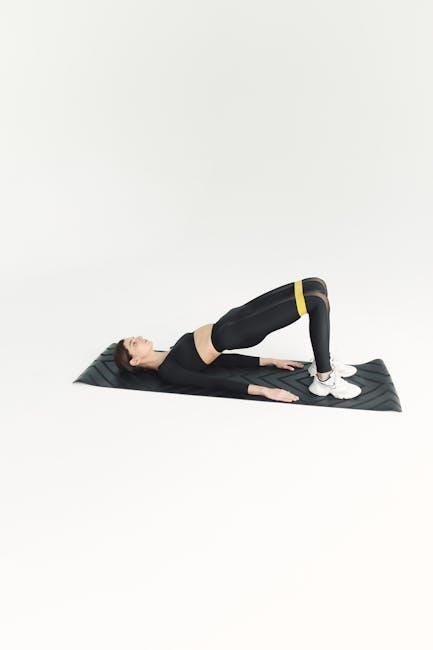
Exercises like side leg raises, clam shells, and glute bridges effectively target the hip abductors, while squats, lunges, and hip thrusts strengthen the glutes. Incorporating these exercises into a regular routine improves muscle balance and reduces the risk of IT band irritation. Progressive overload, gradually increasing resistance, is key to continued improvement.
A strong foundation of hip and gluteal strength supports proper alignment and movement patterns, minimizing the strain on the IT band and promoting long-term joint health. Consistent strength training is a proactive approach to injury prevention.
Appropriate Footwear and Orthotics
Selecting appropriate footwear is crucial for mitigating IT band syndrome, particularly for runners and athletes. Shoes should provide adequate cushioning and support, matching an individual’s foot type and gait pattern. Worn-out or ill-fitting shoes can exacerbate biomechanical imbalances, contributing to IT band stress.
Foot pronation, the inward rolling of the foot, is a common factor in ITBS. Orthotics, either custom-made or over-the-counter, can help correct excessive pronation by providing arch support and improving foot alignment. This reduces the strain on the lower limb, including the IT band.
A professional gait analysis can determine the optimal footwear and orthotic needs. Investing in quality footwear and considering orthotics are proactive steps towards preventing and managing IT band syndrome, promoting comfortable and efficient movement.







Leave a Comment