
instructional assistant description
Instructional Assistant Description: A Comprehensive Plan
Today’s date is 01/27/2026. Instructional Assistants support teachers with supervision, instruction, and classroom tasks, aiding student learning and maintaining a structured environment.
Instructional Assistants (IAs) are vital members of the educational team, providing crucial support to teachers and students. Their role extends beyond simple assistance; IAs actively contribute to a positive and productive learning environment. They help implement lesson plans, modify instructional materials, and offer direct support to students needing extra help.
The IA position is distinguished by its focus on assisting with both academic and behavioral needs. They work closely with educators to ensure all students have access to quality education. As of today, 01/27/2026, the demand for skilled IAs continues to grow, reflecting the increasing recognition of their importance in modern classrooms. This role requires dedication, patience, and a genuine commitment to student success.
II. Primary Purpose and Job Overview
The primary purpose of an Instructional Assistant is to assist teachers in supervising and instructing students, both individually and in groups. This role encompasses a wide range of tasks, from preparing materials to monitoring student behavior. IAs help create a supportive classroom atmosphere where all learners can thrive.
The job overview includes implementing curriculum, modifying lessons, and providing direct student support. As of 01/27/2026, IAs are essential for maintaining classroom structure and ensuring students stay focused. They also contribute to record-keeping and administrative duties, freeing up teachers to concentrate on instruction. This position requires a collaborative spirit and a dedication to student achievement.
III. Core Responsibilities & Daily Tasks
Core responsibilities of an Instructional Assistant involve assisting teachers with lesson delivery and student engagement. Daily tasks include preparing instructional materials – copying, creating visuals, and collecting resources – as noted on 11/30/2018. IAs provide direct support to students, helping them understand concepts and complete assignments.
Furthermore, they aid in classroom management, monitoring student behavior and maintaining a positive learning environment. This role requires flexibility to handle various tasks, from grading papers to assisting with administrative duties. IAs implement curriculum plans and work closely with educators to ensure student success, as of 05/10/2025.
A. Assisting with Lesson Preparation
Instructional Assistants significantly contribute to lesson preparation by gathering and organizing necessary materials. This includes photocopying worksheets, assembling learning packets, and creating visual aids like charts and displays, as highlighted on November 30, 2018. They may also assist in modifying existing materials to suit individual student needs.

Preparing the classroom environment for activities is also key, ensuring all resources are readily available. IAs often collect and organize materials for specific lessons, streamlining the teacher’s workflow. This proactive support allows educators to focus on instruction and student interaction, maximizing learning time.

B. Direct Student Support
Instructional Assistants provide crucial direct support to students, helping them grasp concepts and complete assignments. This includes one-on-one tutoring, small group instruction, and clarifying directions. They assist students who need extra help, reinforcing lessons taught by the teacher and offering individualized attention.
IAs also help students stay on task and focused, providing encouragement and positive reinforcement. They can assist with organizational skills, helping students manage their materials and time effectively. Furthermore, they support students with specific learning needs, implementing strategies outlined by teachers or special education staff, fostering academic success.
IV. Classroom Management & Supervision
Instructional Assistants play a vital role in maintaining a positive and productive classroom environment. They actively supervise students during various activities, including transitions, recess, and lunch, ensuring safety and appropriate behavior. IAs assist teachers in implementing classroom rules and procedures, promoting a structured learning space.
Effective classroom management involves monitoring student interactions and intervening when necessary to address disruptive behavior. Assistants help redirect students, encourage positive social skills, and foster a respectful atmosphere. By proactively supervising and supporting a positive climate, IAs contribute significantly to a focused and effective learning experience for all students.
A. Monitoring Student Behavior
Instructional Assistants consistently observe student behavior, both individually and within groups, to identify potential issues or concerns. This involves actively scanning the classroom during lessons, transitions, and free time, noting any disruptions or deviations from expected conduct. Assistants are trained to recognize early warning signs of behavioral challenges and proactively address them.
Careful monitoring allows IAs to provide timely interventions, redirecting students who are off-task or exhibiting inappropriate behavior. They document observations as needed, communicating significant concerns to the teacher to facilitate collaborative problem-solving and support student success. Consistent monitoring is key to a safe and productive learning environment.
B. Maintaining a Positive Learning Environment
Instructional Assistants play a crucial role in fostering a supportive and encouraging classroom atmosphere. This involves promoting respectful interactions between students, celebrating successes, and offering positive reinforcement for effort and achievement. IAs actively encourage participation and create a sense of belonging for all learners.
They assist in managing conflicts constructively, guiding students towards peaceful resolutions and promoting empathy. By modeling positive behavior and providing emotional support, IAs contribute to a classroom culture where students feel safe, valued, and motivated to learn. A positive environment is essential for optimal academic and social-emotional growth.
V. Administrative & Clerical Duties
Instructional Assistants frequently handle essential administrative tasks to support efficient classroom operations; These duties include grading assignments under teacher supervision, meticulously maintaining student records, and accurately tracking attendance. Preparing instructional materials, such as copying handouts and assembling learning packets, is also a key responsibility.
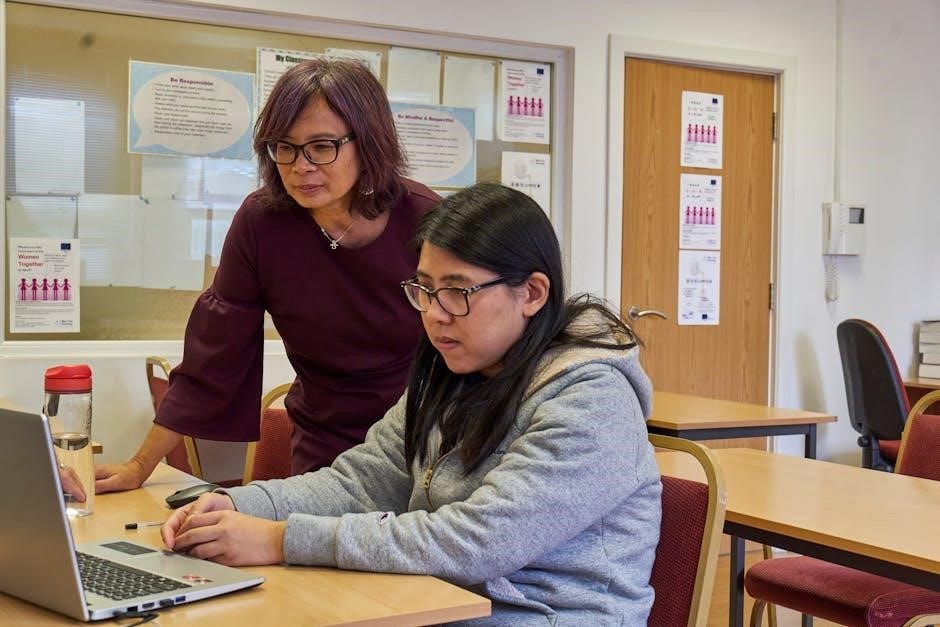
IAs may assist with organizing classroom resources, filing documents, and managing communication with parents. Maintaining a tidy and organized learning space is crucial. These clerical duties free up teachers’ time, allowing them to focus on direct instruction and individualized student support, ultimately enhancing the learning experience.
A. Grading Assignments & Record Keeping
Instructional Assistants play a vital role in assessment by assisting with grading assignments, typically under the direct guidance of the classroom teacher. This may involve scoring objective tests, checking homework completion, and providing feedback on student work. Accurate record-keeping is paramount; IAs maintain student files, track attendance, and input data into school systems.
Maintaining confidentiality of student information is essential. Detailed records support informed instructional decisions and allow teachers to monitor student progress effectively. Consistent and organized record-keeping contributes to a well-managed classroom and facilitates communication regarding student performance.
B. Preparing Instructional Materials
Instructional Assistants significantly contribute to lesson delivery by preparing a wide range of instructional materials. This includes photocopying worksheets, creating visual aids like charts and posters, and assembling necessary supplies for activities. They may also assist in developing materials tailored to individual student needs, ensuring accessibility and engagement.
Organizing and maintaining these materials is crucial for efficient classroom operation. IAs often collect and organize resources, ensuring everything is readily available when needed. This proactive preparation frees up the teacher’s time, allowing them to focus on direct instruction and student interaction.

VI. Collaboration with Teachers & Staff
Effective collaboration is central to the Instructional Assistant role. IAs work closely with teachers to understand lesson plans, student needs, and classroom objectives. Regular communication ensures a cohesive learning environment and allows for shared insights regarding student progress.
Collaboration extends beyond the classroom, encompassing interactions with other school staff, such as specialists and administrators. IAs may participate in team meetings, contributing valuable observations and supporting school-wide initiatives. This teamwork fosters a supportive atmosphere and enhances the overall educational experience for students.
VII. Specific Skills & Qualifications
Successful Instructional Assistants typically possess a high school diploma or equivalent, with some positions requiring further education. Crucially, strong soft skills are essential, including unwavering patience and clear, effective communication. The ability to adapt to diverse learning styles and maintain a positive attitude is paramount.
Beyond foundational skills, IAs benefit from organizational abilities and a proactive approach to problem-solving. A genuine desire to support student success and a commitment to teamwork are highly valued. These qualifications ensure IAs can effectively contribute to a thriving educational setting.
A. Educational Requirements
Generally, a high school diploma or its equivalent is the minimum educational requirement for most Instructional Assistant positions. However, specific requirements can vary significantly based on the school district, state regulations, and the specific needs of the role. Some districts may prefer candidates with an Associate’s degree or coursework in education.
Further education, such as completion of a paraeducator training program, can be advantageous and may even be mandated in certain areas. These programs often cover topics like child development and effective instructional strategies, enhancing an IA’s preparedness.
B. Required Soft Skills (Patience, Communication)
Beyond formal education, exceptional soft skills are crucial for success as an Instructional Assistant. Patience is paramount when working with students who may struggle with concepts or exhibit challenging behaviors. Effective communication skills – both verbal and written – are essential for interacting with students, teachers, and parents.

Strong interpersonal skills, adaptability, and a positive attitude are also highly valued. The ability to remain calm under pressure, demonstrate empathy, and work collaboratively within a team are vital components of this role, fostering a supportive learning environment.
VIII. Physical Demands of the Position
The role of an Instructional Assistant often requires a moderate level of physical activity. Assistants may need to stand or walk for extended periods, assisting students with mobility or classroom activities. Lifting and carrying instructional materials, potentially up to 25 pounds, is a common requirement.
The position also demands physical stamina to manage a dynamic classroom environment. Frequent bending, kneeling, and reaching may be necessary. Maintaining alertness and responding quickly to student needs are crucial. Reasonable accommodations can be made for individuals with disabilities, ensuring equitable access to this rewarding career.
IX. Technology Proficiency

Modern Instructional Assistants require a foundational level of technological skill. Basic computer proficiency, including word processing, email communication, and internet navigation, is essential for completing administrative tasks and accessing resources. Familiarity with common office software suites, like Microsoft Office or Google Workspace, is highly beneficial.
Increasingly, schools utilize educational software for student assessment, progress monitoring, and instructional delivery. Assistants should be comfortable learning and utilizing these platforms. Basic troubleshooting skills and the ability to adapt to new technologies are valuable assets in supporting a technology-rich learning environment.
A. Basic Computer Skills
Essential computer skills for Instructional Assistants encompass proficiency in fundamental operations. This includes confidently using a computer for tasks like creating and editing documents, managing files, and navigating the internet effectively. Strong typing skills and accuracy are also crucial for efficient record-keeping and report generation.
Furthermore, familiarity with email communication – sending, receiving, and organizing messages – is vital for interacting with teachers, staff, and potentially parents. A basic understanding of spreadsheet software, like Excel, can aid in tracking student data. These skills form the bedrock of technological competence.
B. Educational Software Familiarity
Instructional Assistants frequently utilize specialized educational software to support teaching and learning. Familiarity with common platforms for creating interactive lessons, delivering online assessments, and tracking student progress is highly beneficial. This may include learning management systems (LMS) like Google Classroom or Canvas, and programs designed for specific subjects, such as reading or math.
Proficiency in basic presentation software, like PowerPoint, can assist in preparing visual aids. The ability to quickly learn new software applications is also valuable, as educational technology is constantly evolving. Adaptability and a willingness to embrace new tools are key.
X. Understanding of Child Development
Instructional Assistants benefit greatly from a foundational understanding of child development principles. Recognizing typical developmental milestones across various age groups allows for appropriate expectations and tailored support. This knowledge informs how assistants interact with students, interpret behaviors, and assist with lesson modifications.
Awareness of cognitive, social, emotional, and physical development helps in identifying potential learning challenges or areas where a student might need extra encouragement. Understanding how children learn best at different stages is crucial for effective assistance and fostering a positive learning environment.
XI. Special Needs Support
Instructional Assistants often play a vital role in supporting students with special needs, including those with Individualized Education Programs (IEPs). This involves assisting in implementing IEP goals and accommodations, providing one-on-one support during lessons, and helping students access the curriculum.
Furthermore, assistants may be responsible for implementing Behavior Intervention Plans (BIPs) designed to address specific behavioral challenges. Maintaining confidentiality and collaborating closely with special education teachers and other professionals are essential components of this role, ensuring inclusive and effective learning experiences for all students.
A. Assisting Students with IEPs
Instructional Assistants provide crucial support to students with Individualized Education Programs (IEPs). This includes implementing specific accommodations outlined in the IEP, such as providing extended time on assignments or offering preferential seating. Assistants help students understand assignment requirements and break down tasks into manageable steps.
They may also assist with data collection to monitor student progress towards IEP goals, reporting observations to the special education teacher. Maintaining a positive and encouraging learning environment is key, fostering student independence and success while adhering to the IEP’s guidelines and promoting inclusive practices.
B. Implementing Behavior Intervention Plans
Instructional Assistants play a vital role in implementing Behavior Intervention Plans (BIPs) designed for students with behavioral challenges. This involves consistently applying strategies outlined in the BIP, such as positive reinforcement systems or redirection techniques. Assistants carefully observe student behavior, documenting incidents and triggers as directed by the teacher or behavior specialist.
They proactively create a supportive classroom environment that minimizes potential behavioral issues. Maintaining composure and responding calmly to challenging behaviors is essential, ensuring student safety and promoting positive interactions; Accurate data collection and consistent implementation are key to the BIP’s effectiveness.
XII. Safety & Emergency Procedures
Instructional Assistants are crucial in maintaining a safe learning environment. They must be thoroughly trained in school-wide safety protocols, including fire drills, lockdown procedures, and first aid basics. Assistants actively supervise students to prevent accidents and injuries, promptly reporting any safety concerns to the teacher or administration.
During emergencies, they assist with evacuation procedures, ensuring all students are accounted for and follow instructions calmly. Knowledge of basic first aid allows them to provide immediate assistance for minor injuries. Maintaining a vigilant awareness of surroundings and proactively addressing potential hazards are vital components of this role.
XIII. Communication with Parents/Guardians
Instructional Assistants often serve as a communication link between teachers and parents/guardians. While teachers typically lead parent-teacher conferences, assistants may contribute by sharing observations about student progress or behavior. They can assist with translating information or relaying messages, ensuring clear and consistent communication.
Maintaining confidentiality is paramount when discussing students with parents. Assistants should always defer to the teacher for sensitive topics or complex concerns. Promptly informing the teacher of any parent communication is essential. Positive and professional interactions foster a strong home-school connection, supporting student success.
XIV. Professional Development Opportunities

Instructional Assistants benefit greatly from ongoing professional development. Schools often provide training on topics like classroom management, behavior intervention strategies, and supporting students with special needs. Workshops focusing on effective communication and collaboration with teachers are also valuable.
Seeking out additional training, such as courses on child development or specific instructional techniques, demonstrates initiative and enhances skills. Some districts offer tuition reimbursement for relevant coursework. Participating in professional development not only improves assistant performance but also contributes to a more skilled and supportive educational environment for all students.
XV. Reporting Structure & Supervision
Instructional Assistants typically report directly to the classroom teacher with whom they are assigned. This teacher provides daily supervision, guidance, and feedback on performance. In larger schools or districts, there may also be a designated special education coordinator or assistant principal who provides oversight.
Regular meetings with the supervising teacher are crucial for discussing student progress, addressing challenges, and ensuring alignment with instructional goals. Clear communication channels and a collaborative working relationship are essential for effective support. The assistant’s performance is often evaluated as part of the teacher’s overall classroom assessment.
XVI. Distinguishing Factors: Instructional Assistant vs. Teacher Aide

Instructional Assistants and Teacher Aides both support educators, but their roles differ. IAs often assist with lesson preparation, modifying materials, and implementing curriculum under teacher direction. They may work with small groups or individual students needing extra help.
Teacher Aides generally focus on more clerical tasks – photocopying, organizing materials, and basic classroom maintenance. While both roles involve student supervision, IAs typically have greater involvement in the instructional process. The distinction can vary by district, but IAs generally require more specialized training and qualifications.
XVII. Salary Expectations & Benefits
Instructional Assistant salaries vary significantly based on location, education, experience, and school district. Generally, entry-level positions offer hourly wages, while experienced IAs may receive annual salaries. As of late 2025, the median hourly wage ranges from $14 to $20, potentially reaching $30+ in high-demand areas.
Benefits packages often include health insurance, paid time off (sick leave and vacation), and retirement plan options. Some districts offer tuition reimbursement for professional development. Opportunities for salary advancement exist with additional certifications or degrees, leading to increased responsibilities.
XVIII. Legal & Ethical Considerations
Instructional Assistants operate under strict legal and ethical guidelines. Maintaining student confidentiality, as per FERPA regulations, is paramount. IAs must adhere to school district policies regarding appropriate interactions with students, avoiding any form of abuse or neglect. Reporting suspected child abuse is a legal obligation.
Ethical conduct includes respecting student diversity, maintaining professional boundaries, and avoiding conflicts of interest; IAs should never share sensitive student information with unauthorized individuals. Understanding and upholding these standards ensures a safe and supportive learning environment for all students.
XIX. Future Career Paths for Instructional Assistants
Instructional Assistants gain valuable experience, opening doors to diverse career paths. Many pursue teaching degrees, leveraging their classroom knowledge. Opportunities exist in special education, benefiting from direct support experience with IEPs and behavior plans.
Further education can lead to roles as curriculum specialists or educational administrators. Some IAs transition into school counseling or social work, utilizing their understanding of student needs. Continued professional development enhances skills, enabling career advancement within the education sector. The role serves as a strong foundation for a fulfilling career in education.
XX. Conclusion: The Value of an Instructional Assistant
Instructional Assistants are integral to a thriving educational environment. They provide crucial support to teachers, enabling personalized attention for students and efficient classroom management. Their assistance with lesson preparation, grading, and administrative tasks frees educators to focus on instruction.
IAs foster positive learning environments, contributing to student success. They bridge gaps in learning, offering individualized help and promoting inclusivity. Recognizing their dedication and skills is paramount. Ultimately, the value of an Instructional Assistant lies in their commitment to student achievement and overall school well-being.





Leave a Comment